Onboarding that enables meaningful first actions
The existing Brain in Hand app onboarding revealed clear pain points and opportunities, identified through a combination of data analysis and user testing. We defined an ideal first-time journey for new Brain in Hand users, focusing on meaningful early actions and used onboarding to clearly communicate the value of each.


The desired outcome
The primary outcome we aimed to improve was increasing attendance at a second coaching session, as users who attend two or more sessions are significantly more likely to gain value and renew their licence. At the time, no-shows for the first session were common, impacting both business costs and coach availability.
We focused on educating users about the value of Brain in Hand and encouraging engagement with key repeatable actions in the app. By helping users return regularly before their first coaching session, we aimed to build familiarity and confidence ahead of that initial conversation, reducing drop-off and improving attendance.
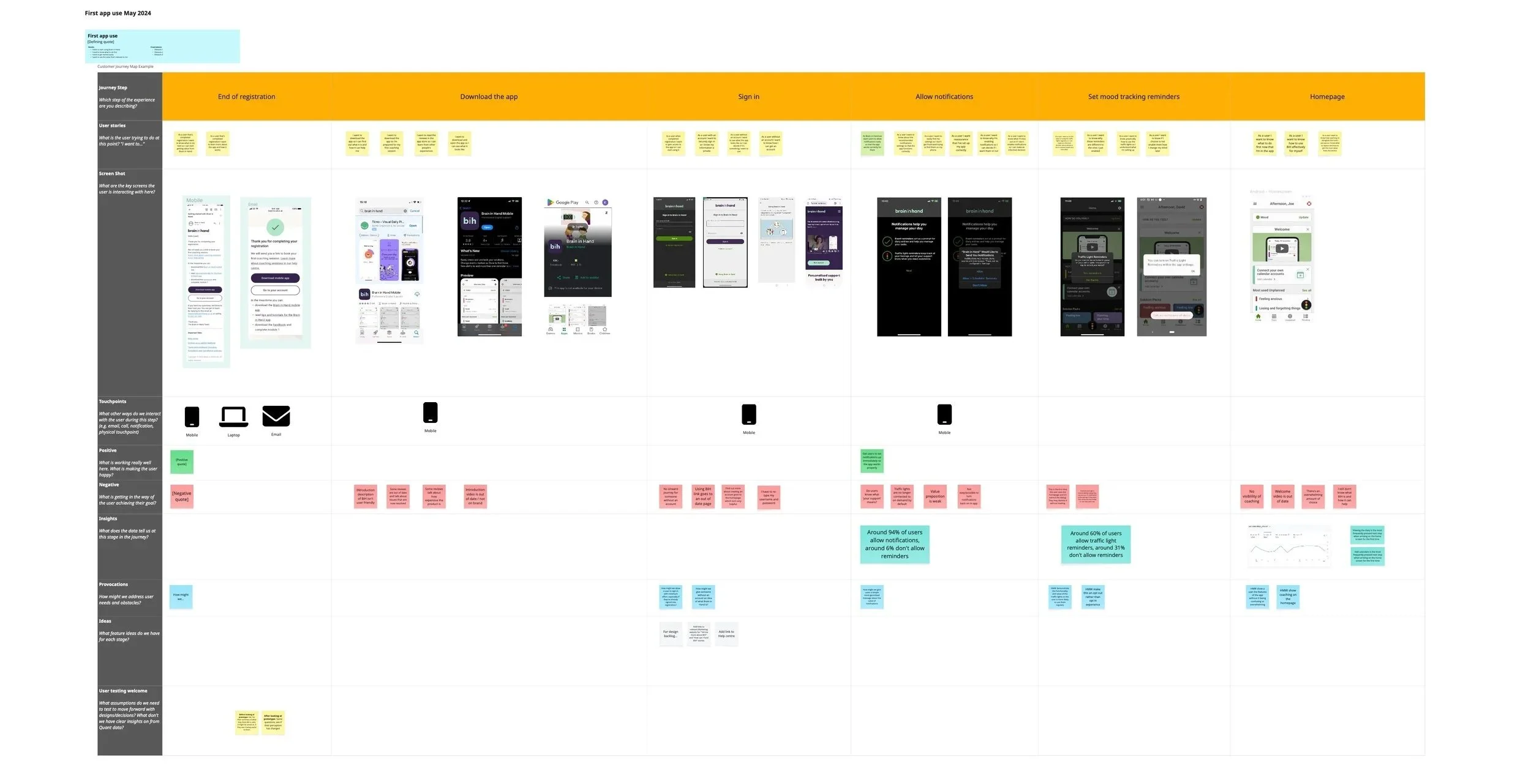
The old user flow
We used a combination of user interviews and simple data analysis to find the pain points and opportunities in the current onboarding.
What we found:
Data showed us that users enabled event and task reminders more than mood tracking.
Interviews shows us that people we’re confident about information sharing and we’re sure how mood tracking really worked.
Data showed us that the welcome video was getting high engagement
Interviews told us that people preferred video content to reading text.
Data showed us that the most frequent next steps when landing on the homepage were viewing the diary and adding a calendar.
Interviews told us that again, users we’re sure how syncing a calendar worked.
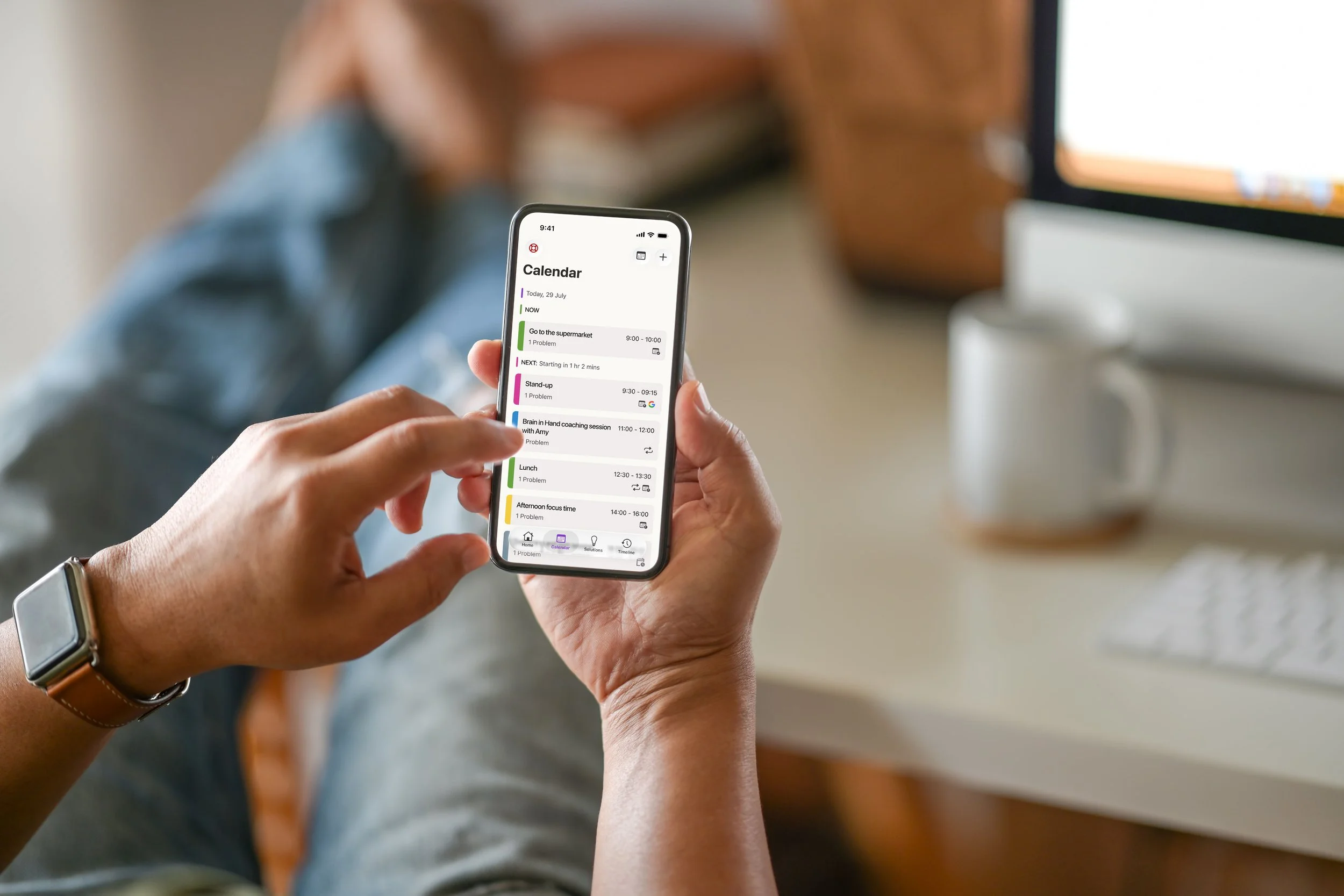
The meaningful first actions
The app supports a small set of key, repeatable actions that form the foundation of habit-building and long-term value. When completed regularly, these actions help users embed Brain in Hand into their daily lives:
Enabling notifications
Allowing users to remind themselves to complete tasks and routines, while also prompting regular check-ins.
Syncing a calendar
Bringing work and personal calendars into Brain in Hand so support can be added to real-life events, with reminders acting as nudges back into the app.
Checking in
Capturing mood, context and journal notes over time to uncover patterns and strengthen personalised support.